Download Kubernetes For Mac

Intro
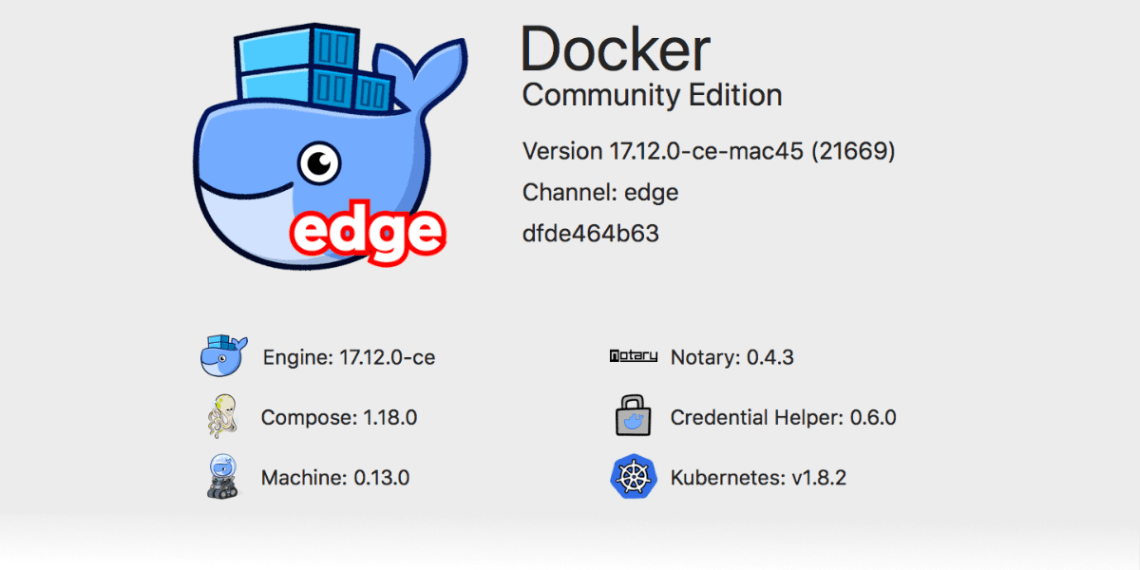
Kubernetes (K8S) is an open-source workload scheduler with focus on containerized applications. We will be running a Kubernetes cluster on our local machine using the following tools: Install Docker for Mac. Docker is used to create, manage, and run our containers. It lets us construct containers. What is Kubernetes. Kubernetes clusters host containerised applications in a reliable and scalable way. Having DevOps in mind, Kubernetes makes maintenance tasks such as upgrades dead simple. What is MicroK8s. MicroK8s is a CNCF certified upstream Kubernetes deployment that runs entirely on your workstation or edge device. Kubernetes support is still considered experimental with this release, so to enable the download and use of Kubernetes components you must be on the Edge channel. The Docker for Mac version should be 17.12.0-ce-mac45 or later after updating. Download for Mac or Windows. Learn why Docker Desktop is the preferred choice for millions of developers building containerized applications. Download for Mac or Windows. Pull rate limits for certain users are being introduced to Docker Hub starting November 2nd. Build Kubernetes.
This is a follow on to the previous writeup on Kubernetes with Minikube and shows how to quickly and easily get a Kubernetes cluster up and running using VirtualBox and Minikube.
The setup is very similar for all platforms, but this post is specifically focused on Mac, as I’m planning on using this as the basis for a more complex post on Jenkins & Kubernetes Pipelines (and that post is now posted, here!).
Installing required components
There are three main components required:
VirtualBox is a free and open source hypervisor. It is a light weight app that allows you to run Virtual Machines on most platforms (Mac, Windows, Linux). We will use it here to run the Minikube Virtual Machine.
Kubectl is a command line tool for controlling Kubernetes clusters, we install this on the host (Mac) and use it to control and interact with the Kubernetes cluster we will be running inside the Minikube VM.
Minikube is a tool that runs a single-node Kubernetes cluster in a virtual machine on your personal computer. We’re using this to provision our k8s cluster and will also take advantage of some of the developer friendly addons it offers.
Downloads and Instructions
Here are links to the required files and detailed instructions on setting each of these components up – I went for the ‘brew install‘ options but there are many alternatives in these links. The whole process is very simple and took about 10 minutes.
VirtualBox: https://www.virtualbox.org/wiki/Downloads
Kubernetes Download For Windows
simply download the Mac VirtualBox .dmg image file and install it
kubectl: https://kubernetes.io/docs/tasks/tools/install-kubectl/
brew install kubectl
Minikube: https://kubernetes.io/docs/tasks/tools/install-minikube/brew install minikube
Starting up Kubernetes via Minikube in VirtualBox on Mac
From the Mac terminal (iTerm2 or whatever you use) running minikube start should kick off the download of the minikube VirtualMachine image.
If you would prefer to use another hypervisor (VMWare, kvm etc) you may need to specify the driver from this list:
https://kubernetes.io/docs/setup/learning-environment/minikube/#specifying-the-vm-driver
most popular hypervisors are well supported by Minikube.
Google Kubernetes
Here’s what that looks like on my Mac – this may take a few minutes as it’s downloading a VM (if not already available locally), starting it up and configuring a Kubernetes Cluster inside it:
there’s quite a lot going on and not very much to see; you don’t even need to look at VirtualBox as it’s running ‘headless’, but if you open it up you can see the new running VM and its settings:
these values are all set to sensible defaults, but you may want to tweak things like memory or cpu allocations – running
minikube config -h
should help you see what to do, for example
minikube start --memory 1024
to change the allocated memory.
If you then take a look at the config file in ~/.minikube/config/config.js you will see how your preferences – resource limits, addons etc – are persisted and managed there.
Looking back at VirtualBox, if you click on “Show” or the running VM you can open that up to see the console for the Minikube VM:
to stop the vm simply do a minikube stop, or just type minikube to see a list of args and options to manage the lifecycle, e.g. minikube delete, status, pause, ssh and so on.
Minikube Addons
One of the handy features Minikube provides are its selection of easy to use addons. As explained in the official docs here you can see the list and current status of each addon by typing minikube addons list
the storage-provisioner and default-storeageclass addons were automatically enabled on startup, but I usually like to add the metrics server and dashboard too, like so:
minikube addons enable metrics-server
minikube addons enable dashboard
I often use helm & tiller, efk, istio and the registry too – this feature save me a lot of time and messing about!
Accessing the Kubernetes Dashboard – all done!
Once that’s completed you can run minikube dashboard to open up the Kubernetes dashboard on your host.
Minikube makes this all very easy; we didn’t have to forward ports, configure firewalls, consider ingress and egress, create RBAC roles, manage accounts/passwords/keys or set up DNS, or any of the many things you would normally want or have to consider to get to this point.
These features make Minikube a great choice for development work, where you don’t want to care about things like this as you would in a “for real” environment.
Your browser should open up the Kubernetes Dashboard, and you can click around and see the status of the many components that comprise your new Kubernetes cluster:
And then…
Next up I’ll be building on this setup by deploying a Jenkins instance inside the Kubernetes Cluster, then configuring that to use Kubernetes to build, manage and deploy applications on the same Kubernetes Cluster.
This is now covered in the next post, here:
kind is a tool for running local Kubernetes clusters using Docker container “nodes”.
kind was primarily designed for testing Kubernetes itself, but may be used for local development or CI.
If you have go (1.11+) and docker installed GO111MODULE='on' go get sigs.k8s.io/kind@v0.9.0 && kind create cluster is all you need!
kind consists of:
- Go packages implementing cluster creation, image build, etc.
- A command line interface (
kind) built on these packages. - Docker image(s) written to run systemd, Kubernetes, etc.
kubetestintegration also built on these packages (WIP)
kind bootstraps each “node” with kubeadm. For more details see the design documentation.
NOTE: kind is still a work in progress, see the 1.0 roadmap.
Download Kubernetes For Mac
Installation and usage 🔗︎
For more detailed instructions see the user guide.
You can install kind with go get sigs.k8s.io/kind. This will put kind in$(go env GOPATH)/bin. You may need to add that directory to your $PATH asshown here if you encounter the errorkind: command not found after installation.
To use kind, you will also need to install docker.
Once you have docker running you can create a cluster with:

To delete your cluster use:
To create a cluster from Kubernetes source:
- ensure that Kubernetes is cloned in
$(go env GOPATH)/src/k8s.io/kubernetes - build a node image and create a cluster with
Multi-node clusters and other advanced features may be configured with a configfile, for more usage see the user guide or run kind [command] --help
Community 🔗︎
Please reach out for bugs, feature requests, and other issues!
The maintainers of this project are reachable via:
- Kubernetes Slack in the #kind channel
- filing an issue against this repo
- The Kubernetes SIG-Testing Mailing List
Current maintainers are @BenTheElder and @munnerz - feel free toreach out if you have any questions!
Pull Requests are very welcome!
If you're planning a new feature, please file an issue to discuss first.
Kubernetes Tutorial
Check the issue tracker for help wanted issues if you're unsure where tostart, or feel free to reach out to discuss. 🙂
See also: our own contributor guide and the Kubernetes community page.
Why kind? 🔗︎
- kind supports multi-node (including HA) clusters
- kind supports building Kubernetes release builds from source
- support for make / bash / docker, or bazel, in addition to pre-published builds
- kind supports Linux, macOS and Windows
- kind is a CNCF certified conformant Kubernetes installer
Code of conduct 🔗︎
Participation in the Kubernetes community is governed by the Kubernetes Code of Conduct.